If you feel like God is far away,

ask yourself “who moved?”

Get Admitted
Showing posts with label sobriety. Show all posts

Monday, December 6, 2021

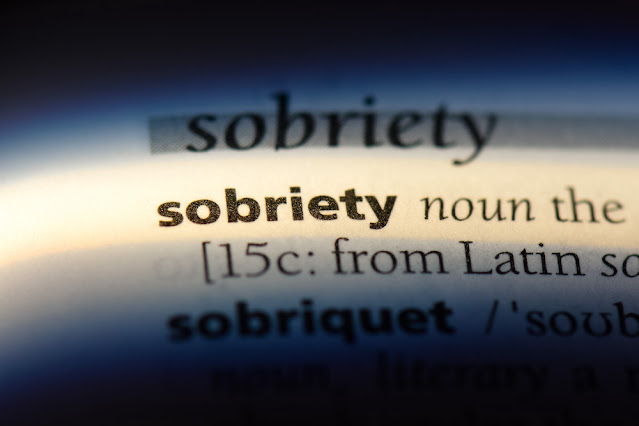
Definition of Sobriety | Sober Meaning

definition of sobriety


Definition of Sobriety

The dictionary definition of sobriety is “the state of being sober,” and the dictionary definition of sober is “not drunk or affected by alcohol, free from alcoholism, not a habitual drinker; serious, staid, muted, solemn, and/or sensible.” Which is fine for covering all bases if your interest in sobriety is purely scholarly; but if you have personal investment in finding freedom from alcoholism (or any other addiction), sobriety is better understood as a mindset and a way of life.


Let’s take a closer look at the “sobriety” aspects listed above.


Not Drunk

Even the most alcohol-dependent achieve this particular state of sobriety on a regular basis, so it’s of limited use in determining when alcohol is a problem for any individual. While frequent “drunken” episodes are certainly reasonable cause to suspect addiction, many people who never seem drunk are nonetheless addicted. (See next point.) And even someone who isn’t strictly impaired may have consumed enough alcohol to adversely affect performance.


Not Affected by Alcohol

This form of “sobriety” sounds like a good thing, but often it’s a red flag. People with addiction, or alcohol abuse disorder, have built up physical tolerance for “normal” amounts of alcohol, so they are more able to consume large amounts without obvious effects.


Not a Habitual Drinker

Since “habitual” is a subjective term, this is a poor criterion for judging who is living in an overall state of sobriety and who isn’t. It’s a common myth that everyone with alcoholism drinks daily: in fact, there’s a subcategory of alcohol dependence characterized by drinking primarily on weekends. Almost any drinker who is embarrassed to share details, or can’t imagine skipping a regular drink for anything, has a toxic habit regardless of actual drinking patterns.


Serious, Staid, Muted, Solemn

Sadly, regardless of context, many people hear the same negative implications in all the above words: dull, colorless, no fun, less than happy, even living under a cloud of depression. Which is how too many people with addiction visualize a future of physical sobriety: however miserable their lives may be when centered around the bottle, they fear a bleak, comfortless future should they stop drinking. Even after detoxing and starting down the sobriety path, most people are troubled for months by yearnings to “go back to Egypt” when life gets stressful and memory sees only the comfortable parts of the old slavery. Escaping this temptation requires advance planning, strong accountability—and a positive understanding of how fulfilling life can be without drugs. In reality, sobriety is an amazing chance to find a happier, more vibrant life.


Sensible

The least negatively viewed of the synonyms for emotional sobriety, this can still seem less than desirable to those who favor excitement and challenge. Common sense doesn’t have to be incompatible with adventure, though. Common sense—or wisdom—is what creates a focused mindset for accomplishment, and keeps a legitimate drive for achievement/challenge/fulfillment from degenerating into pointless striving for instant gratification. By far the best way to approach a healthy challenge is through a purposeful approach that uses your experience and natural gifts to benefit the larger world—a principle alluded to in the last of the classic 12 Steps: “Having had a spiritual awakening as the result of these steps, we tried to carry this message to [other] alcoholics, and to practice these principles in all our affairs.”


Sobriety: Free From Alcoholism

The key word is “free,” which properly has not only positive but proactive connotations. There’s far more to sobriety, and to freedom, than the absence of the undesirable: a long-term lifestyle of true sobriety comprises multiple active elements.

  • It means accepting your circumstances and making the best of them.
  • It means taking responsibility for your actions and your life.
  • It means cultivating and contributing to meaningful relationships with your family, your friends, and your God.
  • It means taking care of yourself physically, emotionally, and spiritually.
  • It means discovering your purpose and working to achieve it through your goals, your vocation, and your relationships.
  • And it means becoming the best possible version of your uniquely created self, and living in faith that a clearheaded (sober) view of life includes confidence that things will work out for the best.


California Faith-Based Drug and Alcohol Addiction Treatment

Please contact Celebrate Hope to learn more about our faith-based addiction treatment program. Our team will help you break the cycle of addiction and discover the blessings of permanent sobriety. We rely on the teachings of Jesus Christ, along with evidence-based therapies to get individuals on the path of recovery.

Friday, January 17, 2020

Friends Who are Good for Recovery

friends in recovery
Accepting that you have an addiction means that you will have to make a number of changes if long-term recovery is to be achieved. If you have attended an addiction treatment program or meeting of recovery, then you have learned that life is different now that you are clean and sober.

Naturally, it’s vital to stay away from environments that can jeopardize your recovery. Moreover, and this part is harder, you must stay away from many people with whom you once spent time. This is especially true when it comes to old using friends.

It’s challenging to say goodbye or cut off ties with individuals even when you know that they are not beneficial to your recovery. Still, your progress depends on altering the people you keep in your circle of friends.

If you attend meetings on a regular basis, then you have already begun fostering relationships with like-minded individuals. These people are replacing the individuals you once associated with; what’s more, such men and women care about your well-being and continued progress.

Making Friends in Recovery


Hopefully, you have already said goodbye to the people from your past. If not, there is no time like the present. Put all your energy into making new friends who do not use drugs and alcohol. Meetings are the best place to find the caliber of individuals who are suitable for your program.

The people that you attend meetings with share similarities with you, and understand what you have been through; you have a lot in common with such men and women. These individuals will not just help you stay the course of recovery; they will become lifelong friends.

Prioritize your relationships with others in sobriety, especially in early recovery. Ask people to get together after the meeting so you can get to know them better. In time, you will look forward to seeing the people in your support network. They will also invite you to do things with them in their free time.

Again, we understand that it’s hard to break ties with people who were your friends for years. However, anyone who is not supportive of your recovery is probably not that great of a friend at the end of the day. Acknowledging that reality will help you make hard choices that hugely benefit your recovery.

Please do not despair if you have trouble making friends in early recovery. It may take time for you to feel comfortable confiding and opening up with new people in your life.

Trust and believe that it will become easier the longer you stick around the rooms of recovery. Do not lose hope, and you will have a friend group before you know it. That's guaranteed!

California Faith-Based Addiction Treatment


Please contact Celebrate Hope today to learn more about our faith-based addiction treatment program in Southern California. We can help you break the cycle of addiction, adopt a program of recovery, and assist you in reconnecting with your Lord and Savior. (866) 751-2028

Friday, August 23, 2019

Staying Clean, Sober, and Fit in Recovery

recovery
Following stays in addiction treatment, people in recovery understand that life will be different going forward. While they grasp the importance of finding healthy ways to occupy time, still many are unsure of how they will direct their energies. The first months after rehab can be a time of uncertainty.

Most men and women in the first year of their recovery spend a significant amount of time in the company of other clean and sober people. Attending meetings, working with sponsors or recovery coaches, and engaging with peers in recovery in one's free time is a recipe for success, after all. As one becomes stronger in their sobriety, a desire to do more and see other dreams realized is inevitable.

Each person's ambitions are different; some will endeavor to start a career or to bring one to new heights. In both scenarios, going back to school may be necessary for acquiring specific skills and credentials. One of the gifts that recovery provides is an ability to start something new and see it to the end.

After years of alcohol and substance abuse, it is common not to know what path to take once in recovery. A significant number of individuals in recovery never expected to find freedom from drugs and alcohol in the first place. As such, little forethought was ever put into what one would do if he or she ever found independence.

A route that some people in sobriety take involves choosing a career path that consists in being of service. There are many opportunities in the fields of addiction medicine and support. Helping other men and women walk a path of sobriety is a critical facet of recovery. So, it makes sense that some will opt to make a career of assisting others. Gary Rutherford of the UK is one of those individuals.

Helping People Stay Sober, and Get Fit in the Process


Rutherford combined his passion for sobriety and fitness to create a personal training program for men and women in recovery, BBC News reports. Sober for eight years now, he shows men and women with alcohol and substance-use disorders how to bolster both fitness and recovery. A desire to give others living with addiction hope was the impetus for ARC.

"I want to find the strength in that person and draw it out," Rutherford said. "I want to make that person feel like a person, empower them, make them thrive, encourage them."

In sobriety, Gary knew that he wanted to help others, so he went back to school to become an addiction nurse therapist. At the same time, he developed a passion for running and eventually CrossFit and strength training, according to the article. This led him to create ARC Fitness; ARC stands for Addiction Recovery Coaching. The not-for-profit personal training program's website states:

ARC Fitness supports individuals with substance use disorders to achieve healthy and sustainable recovery through the application of physical activity and positive lifestyle choices. 

Scott Reid was among the first group of six clients to go through ARC. He shares that he relapsed after completing a London-based treatment program and that he was feeling alone before finding Rutherford. ARC helped Scott reprioritize his recovery and gave him a sense of community.

"A group of six strangers came together and left as friends that understood one another. So if one of us felt down or was struggling we could pick up the phone or go out for a coffee or a walk or something."

Faith-Based Addiction Treatment


Celebrate Hope can assist you in ending the cycle of addiction and learning how to thrive in recovery. Our faith-based recovery programs rely on evidence-based therapies, in conjunction with the teachings of Jesus Christ. Please contact us today to learn more.

Friday, July 26, 2019

Honing Life Skills in Recovery

life-skills for recovery
Addiction recovery teaches people how to deal effectively with life on life’s terms. Even though a person has stopped drinking or drugging, they are still going to struggle with the demands and challenges of life. Since stress is one of the leading causes of relapse, it’s prudent to discuss some ways to keep it at bay. There are many things you can do to make navigating life in recovery less challenging.

Most people, it’s fair to say, lack specific life skills when they get to addiction treatment. Alcohol and substance use disorders take precedent over practically all else. It takes an enormous amount of effort to ensure one has their drink or drug of choice, day in and day out. Few people can manage other important tasks when in the grips of the disease. This is especially true for those who began using at a young age.

Neglecting nutrition, school, work, and bills go hand in hand with mental illness. Being responsible and accountable is not often said about those living with a use disorder. Neglecting aspects of one’s life becomes a vicious cycle. Failing to accomplish everyday tasks causes stress in a person’s life; addicts and alcoholics will use drugs and alcohol to cope with that stress.

In recovery, people learn that mitigating stress is vital. Men and women are taught that fostering life skills is a must, in order to maintain balance. Addiction thrives in extremes; if life becomes chaotic, the risk of relapse increases significantly. To avoid doing things that can jeopardize progress, men and women need to discover ways to keep their lives in order.

Life Skills for Addiction Recovery


There are several types of life skills, such as managing finances and living within your means. Other fundamental skills in life include practicing self-care (i.e., eating right and exercising), time management, and keeping an organized living space. Naturally, we could dedicate separate posts to each of the above skill sets. Today’s post will focus on the need for emphasizing the importance of organization.

Early recovery is a fragile time for individuals for several reasons. Sobriety is not a natural state for people with a history of addiction, nor is doing something every day to prevent a return to drugs and alcohol. Years and years of substance use changes how people think and process information. Such men and women have trouble dealing with anything that is outside their control. As such, it is vital to do things that establish and support equilibrium.

Organization is central to preventing outside variables from causing stress. Keeping a tidy household is critical since we spend most of our time in the place we reside. Knowing where essential belongings are will help you avoid getting upset when something can’t be found.

Doing laundry each week will ensure you have clean clothes for work and social engagements. Dedicating small chunks of time throughout the week to domestic chores will help you stay organized and prepared for whatever comes up. Moreover, having a clean living space can also improve how you feel.

Keeping an orderly domicile is a skill that dovetails nicely with financial management. Many people are inclined to let their mail pile up; they sometimes open envelopes weeks after receipt. Making a point of sorting your mail will contribute to tidiness and also help you stay on top of your bills. When bills are paid on time, it alleviates stress.

Honing your life skills takes practice, but it’s doable for anyone clean and sober. You might try dedicating certain days of the week for a particular task (i.e., dusting on Monday, laundry on Wednesday, and bills on Friday). It will make things more manageable.

Learning Life Skills in Christian Rehab


At Celebrate Hope, we believe that clients who adopt new routines are less likely to fall back on old behaviors. We work with clients to hone their life skills. Please contact us today to learn how our Christian drug and alcohol rehab center can help you overcome the emotional and physical bondage of addiction.
CignaAetnaBlueCross BlueShieldUnited HealthcareMore Options/Verify Benefits

Contact Celebrate Hope

Our Christian counselors walk with clients in their journey of recovery and reconnection to God.


Request a Call From Us